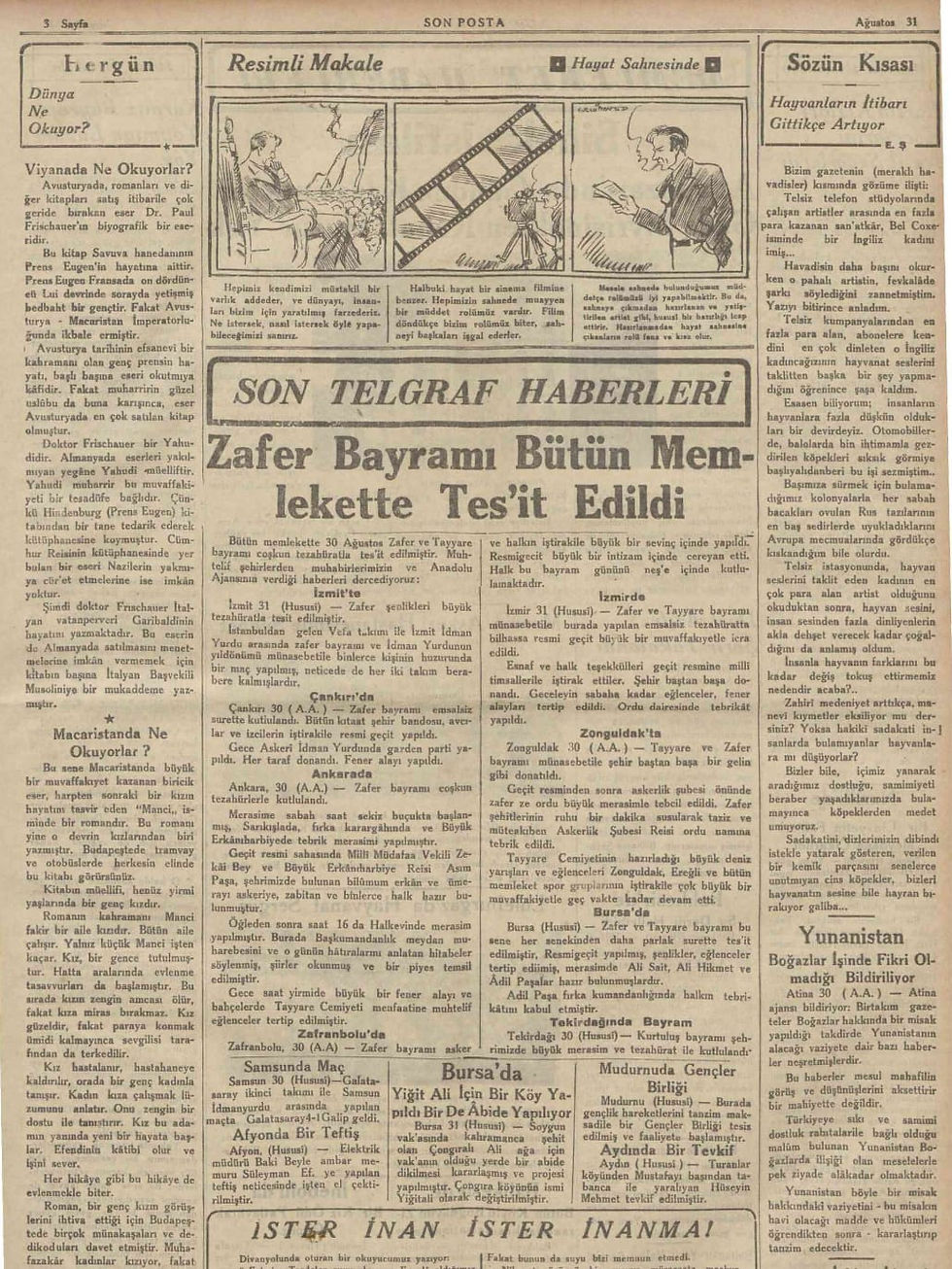
“Women’s Hundred-Year-Old Silent Struggle: The Changing World Between 1789 and 1940”

Throughout history, debates have profoundly impacted women's position within society, and this issue has never been easily resolved. While the slogan of "equality" during the 1789 French Revolution aroused great hopes, women were excluded from this equality. Despite this, they continued to fight; Olympe de Gouges's 1791 Declaration of the Rights of Woman and of the Citizen ("Déclaration des droits de la femme et de la citoyenne"), with its statement that "Woman is born free as man is born free," was a bold call raised despite the circumstances of the time.¹ However, this call triggered a period of oppression that culminated in her execution and the closure of women's clubs.²
Similarly, while the value of women was frequently discussed in the Ottoman Empire, this value was not always reflected with the same force in social life; schools were established and women's magazines began to be published, but the intellectual transformation of society lagged behind these developments. The process of increasing women's visibility in the Ottoman Empire became particularly evident with the proliferation of women's magazines during the Tanzimat and Second Constitutional Era periods.³
Women were often forced to act out of fear of disgrace, yet they could only achieve high positions through their own efforts. Yet, this quiet but determined accumulation laid a foundation that would change the course of history. With the proclamation of the Republic, this accumulation of women became visible; the 1926 Civil Code ensured equality within the family and before the law, while the granting of political rights from the 1930s onward paved the way for women to participate in social decision-making.
Thus, women became able to play an active role not only in classrooms or magazines but also in the governance of the country. All these developments demonstrate that women have existed as an invisible force for centuries; once they began to gain their rights, they became powerful enough to determine the fate of a nation. The idea of equality, initially excluded from the French Revolution, evolved into a true social transformation thanks to the struggle waged by women in Türkiye alongside the Republic, and a silent resistance transformed into a visible revolution.
FOOTNOTES
¹ Olympe de Gouges, Déclaration des droits de la femme et de la citoyenne (Paris: National Assembly Press, 1791), accessed 20 November 2025, https://gallica.bnf.fr/ark:/12148/bpt6k5621331w .
² Joan Wallach Scott, Only Paradoxes to Offer: French Feminists and the Rights of Man (Cambridge, MA: Harvard University Press, 1996), 14–35. https://books.google.com/books/about/ONLY_PARADOXES_TO_OFFER.html?id=aNaeaRlBq3QC&printsec=frontcover&utm .
³ Serpil Çakır, The Ottoman Women's Movement (Istanbul: Metis Publications, 1994), 22–48.
⁴ Ayşe Durakbaşa, “Women and Modernization in the Republican Period,” Journal of Turkish Studies Literature 5, no. 10 (2007): 9–30,https://dergipark.org.tr/en/pub/talid/issue/45057/564313 .
⁵ Zafer Toprak, Women and Political Rights in Turkey (Istanbul: Tarih Vakfı Yurt Yayınları, 2013), 55–102; Prime Ministry Republic Archives (BCA), “Documents on the Granting of the Right to Vote and Be Elected to Women,” accessed 20 November 2025, https://www.devletarsivleri.gov.tr/ .
BIBLIOGRAPHY
Prime Ministry Republic Archives (BCA). “Documents on Granting Women the Right to Vote and Be Elected.” Accessed 20 November 2025. https://www.devletarsivleri.gov.tr/.
Çakır , Serpil. The Ottoman Women's Movement . Istanbul: Metis Publications, 1994.
Durakbaşa, Ayşe. “Women and Modernization in the Republican Period.” Journal of Turkish Studies Literature 5, no. 10 (2007): 9–30.https://dergipark.org.tr/en/pub/talid/issue/45057/564313 .
Olympe de Gouges. Déclaration des droits de la femme et de la citoyenne . Paris: National Assembly Press, 1791. https://gallica.bnf.fr/ark:/12148/bpt6k5621331w .
Scott, Joan Wallach. Only Paradoxes to Offer: French Feminists and the Rights of Man . Cambridge, MA: Harvard University Press, 1996. https://books.google.com/books/about/ONLY_PARADOXES_TO_OFFER.html?id=aNaeaRlBq3QC&printsec=frontcover&utm .
Land, Victory. Women and Political Rights in Turkey . Istanbul: History Foundation Yurt Publications, 2013.